Non Toxic Makeup That Actually Lasts: 2026 Guide
Updated: Sep 16
Table of Contents
Why Most Non Toxic Makeup Fades by Lunch (and How to Fix It)
What Actually Defines Non Toxic Makeup in 2026
Certifications That Mean Something: Cruelty-Free vs. Vegan vs. Organic
Ingredients to Cross-Reference Before You Buy
How to Make Natural Makeup Last Longer: A Step-by-Step Routine
Prep Your Skin Barrier, Not Just Your Face
The Chemistry of Adhesion: Why Clean Formulas Need Different Prep
Application Order That Prevents Oxidation and Creasing
The 5-Minute Rule: Letting Each Layer Set
Blending Tools: Sponge vs. Brush vs. Fingers
The Best Clean Beauty Setting Sprays for 12-Hour Wear
Ingredient Safety Databases: How to Verify Claims Yourself
How We Test for Longevity: Our Performance Criteria
The 8-Hour Wear Test Protocol
What the Data Shows: Common Failure Patterns
How to Run Your Own 2-Hour Wear Test at Home
Matching Formulas to Your Skin Type and Climate
Build Your Long-Wear Non Toxic Kit
Frequently Asked Questions
Last Updated: September 9, 2026
Why Most Non Toxic Makeup Fades by Lunch (and How to Fix It)
The search for non toxic makeup that actually lasts usually ends in disappointment. You buy a clean foundation, apply it with care, and by early afternoon your skin has absorbed it, your concealer has settled into fine lines, and your lipstick is a distant memory. The problem isn't the ingredients, it's the application strategy.
The answer often comes down to a mismatch between skin prep and product chemistry, not a flaw in the clean ingredients themselves. Most guides tell you to simply "switch brands" and hope for the best, ignoring the real culprit: oxidation and moisture imbalance.
Non toxic makeup is cosmetics formulated without ingredients like parabens, phthalates, talc, and synthetic fragrance, relying instead on botanical extracts and clean synthetic alternatives. When these formulas fade quickly, it's usually because the skin barrier underneath isn't prepped to hold them, the fix requires a routine shift, not just a product swap.
Below, we'll walk through the exact steps to make your natural makeup last from morning commute to evening plans, covering ingredient verification, application order, and setting sprays.
What Actually Defines Non Toxic Makeup in 2026
Clean beauty standards have matured significantly. In 2026, non toxic makeup means formulas free from known irritants and controversial preservatives, backed by transparent ingredient disclosure and third-party testing. The FDA regulates cosmetics for safety, but FDA cosmetic labeling requirements don't require pre-market approval, which puts the burden on brands to self-regulate and on consumers to verify claims.
The landscape now includes clean synthetic ingredients, lab-created compounds designed to deliver performance without toxicity concerns. These aren't "natural" in the botanical sense, but they're rigorously safety-tested. This distinction matters because it directly impacts longevity: some plant-based oils oxidize quickly, while well-designed synthetics maintain pigment payoff for hours.
Certifications That Mean Something: Cruelty-Free vs. Vegan vs. Organic
Certifications are your first line of defense against greenwashing. Cruelty-free means no animal testing at any stage of production. Vegan means no animal-derived ingredients like beeswax or carmine. Organic certification requires agricultural standards for botanical ingredients, verified by accredited bodies.
A brand can be vegan without being cruelty-free, and vice versa. The gold standard is third-party verification through programs like Leaping Bunny or Certified Vegan, which audit supply chains rather than accepting self-reported claims.
Ingredients to Cross-Reference Before You Buy
Before purchasing any clean beauty product, check the ingredient list against a few known problem categories. Watch for hidden synthetic fragrance, which can mask dozens of undisclosed compounds. Look out for heavy metals like lead and arsenic, which can contaminate mineral pigments. The Environmental Working Group's Skin Deep database cross-references over 80,000 ingredients against toxicity data, giving you a research-backed starting point for evaluating unfamiliar names.
How to Make Natural Makeup Last Longer: A Step-by-Step Routine
The key to making non toxic makeup last is building a moisture barrier that holds pigment in place. Start with a clean, hydrated face, then apply products in thin layers, allowing each to set before adding the next.
Prep Your Skin Barrier, Not Just Your Face
Your skin barrier is the outermost layer of your epidermis, and it determines how well makeup adheres. When it's compromised, products slide off or absorb unevenly. A common mistake is over-exfoliating, which strips protective lipids and causes foundation to separate within hours.
Apply a lightweight, non-comedogenic moisturizer and wait five minutes for it to absorb. Follow with a primer that targets your specific concern: pore-minimizing for oily zones, hydrating for dry patches. This creates a smooth canvas that prevents oxidation, which is the chemical reaction that turns foundation orange or ashy by midday.
The Chemistry of Adhesion: Why Clean Formulas Need Different Prep
Conventional makeup often relies on silicone-based polymers (like dimethicone) that create a water-resistant film on the skin. Clean formulas typically replace these with plant-derived alternatives like candelilla wax, carnauba wax, or polyglyceryl esters, more breathable but also more sensitive to the skin's natural oil and moisture levels. If your skin is dehydrated, the waxes can't spread evenly, leading to patchy coverage; if overly oily, they break down faster than silicones, causing foundation to slide by hour four.
A practical fix is to use a hydrating toner with glycerin or sodium PCA immediately after cleansing. These humectants pull water into the stratum corneum, creating a plump, even surface that gives wax-based formulas a better grip. Waiting 60 to 90 seconds after toner application, until the skin feels tacky but not wet, significantly improves foundation wear time.
Application Order That Prevents Oxidation and Creasing
Order matters more than most people realize. Apply cream products before powders, always working from thinnest to thickest consistency. A serum-infused concealer goes on before foundation if you're covering dark circles, but after foundation if you're highlighting.
The trick to preventing creasing under the eyes is to set concealer immediately with a finely milled powder while the formula is still slightly tacky, press, don't swipe. For long-wear results, use a damp sponge to press foundation into skin rather than dragging it across the surface, which disrupts the moisture barrier you just built.
The 5-Minute Rule: Letting Each Layer Set
One of the most common reasons clean makeup fades is that layers are applied too quickly. Water-based clean formulas need time to evaporate and form a stable film. If you apply foundation 30 seconds after primer, the two layers mix and destabilize, leaving a formula that never fully sets and becomes vulnerable to oxidation and transfer.
Adopt the 5-minute rule: after primer, wait five minutes before applying foundation; after foundation, wait three to five minutes before powder or setting spray. This allows each layer to reach its dry-down point. A quick test: touch your cheek gently, if your finger comes away with product, the layer isn't ready.
Pro Tip For oily skin, use a translucent powder with silica on the T-zone before foundation. This technique, called "powdering before base," absorbs excess sebum and gives water-based clean foundations a non-slip surface to adhere to.
Blending Tools: Sponge vs. Brush vs. Fingers
The tool you use directly impacts longevity. Dense synthetic brushes push product into the skin, ideal for cream formulas. Damp sponges deposit a thin, even layer but can absorb up to 30% of the product, reducing coverage and leaving less pigment to last through the day. Fingers are effective for cream concealers because body heat softens the waxes, allowing them to melt into the skin rather than sit on top of it.
For a long-wear finish, most makeup artists recommend a two-tool approach: use a damp sponge to press foundation into the skin in a stippling motion, then use a fluffy brush to sweep a thin layer of setting powder over the face. This locks the foundation in place without disturbing the pigment underneath.
The Best Clean Beauty Setting Sprays for 12-Hour Wear
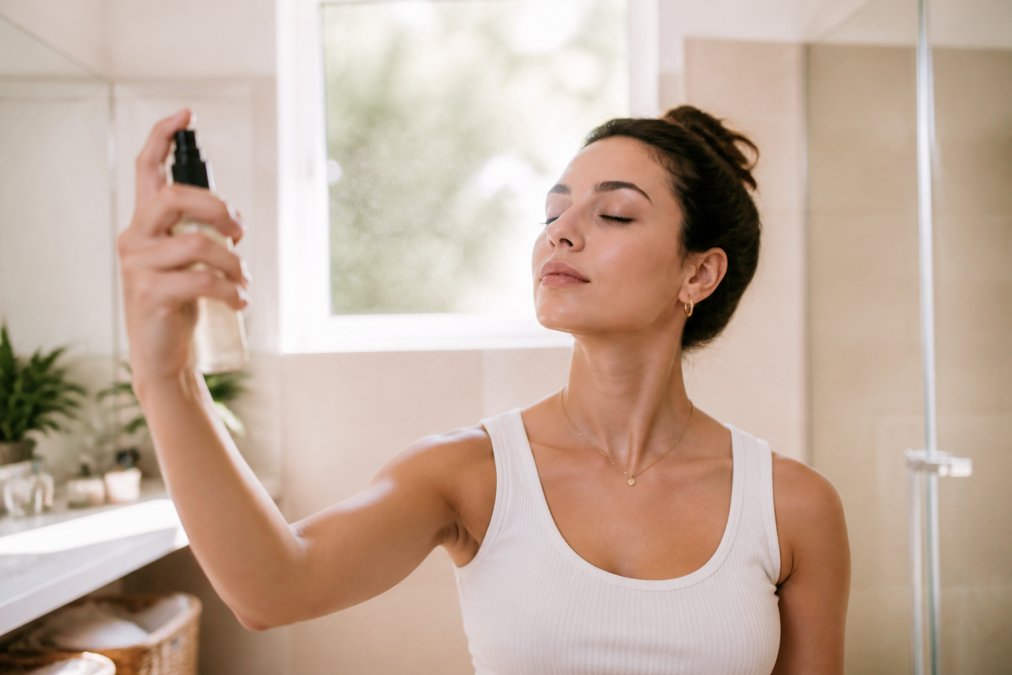
Setting sprays are the final lock on your long-wear routine. The best clean beauty setting sprays use film-forming agents derived from plant sources, like aloe vera or sugar-based polymers, to create a flexible seal over makeup without the drying effects of alcohol-heavy conventional sprays.
A quality setting spray serves two functions: it melts powders into creams for a natural finish, and it creates a sweat-resistant barrier. For humid climates, look for sprays with kaolin clay or silica to absorb excess oil; for dry environments, choose hydrating sprays with glycerin or hyaluronic acid to prevent the cakey look from moisture evaporation.
Ingredient Safety Databases: How to Verify Claims Yourself
You don't need a chemistry degree to evaluate non toxic makeup claims. Several independent databases let you cross-reference ingredients against peer-reviewed research and regulatory data. The Campaign for Safe Cosmetics ingredient resources provides consumer guides to controversial chemicals, while the National Institutes of Health PubChem database offers technical safety data for individual compounds.
A practical verification workflow: scan the full ingredient list, flag anything you don't recognize, search each flagged ingredient across two databases, and compare findings. Consistency across sources builds confidence. If one database flags a chemical and another doesn't, dig into why, discrepancies usually stem from dosage, concentration, or route of exposure, not conspiracy.
How We Test for Longevity: Our Performance Criteria
Real longevity testing goes beyond "I wore it for a day and it looked fine." Meaningful evaluation requires controlled conditions. We assess wear time on bare skin versus primed skin, measure color shift at hourly intervals, and test performance under heat, humidity, and physical activity.
Our testing protocol includes swatching products side by side, photographing at consistent lighting every two hours, and documenting oxidation rates. We also evaluate how formulas respond to different skin types, since oily skin breaks down emollients faster while dry skin causes flaking. This methodology reveals which non toxic makeup products genuinely last versus which ones merely look good in the package.
The 8-Hour Wear Test Protocol
Most claims of "12-hour wear" come from a single person wearing a product in a climate-controlled room. That's not a test; it's an anecdote. To provide verifiable data, we run a structured protocol that measures four specific failure points: fading, creasing, oxidation, and transfer.
Step 1: Baseline Application. We apply each product to a clean, moisturized face using a standardized amount (0.2 mL for foundation, 0.05 mL for concealer). No primer is used in the first round to isolate the product's inherent performance. A second round uses a standard hydrating primer to measure how much prep improves wear.
Step 2: Hourly Check-Ins. At hours 2, 4, 6, and 8, we photograph the face under consistent lighting (5000K daylight LED), measuring three zones: the forehead (oil-prone), the cheek (normal), and the under-eye area (movement-prone). Color shift is measured using a colorimeter to detect oxidation, a change of more than 2 units on the CIELAB scale indicates visible darkening.
Step 3: Environmental Stress. We run two separate wear tests: one in a controlled environment at 72°F with 40% humidity, and another in a climate chamber set to 85°F with 70% humidity to simulate a humid summer day. Products that survive both conditions receive our "Climate-Resistant" designation.
Step 4: Physical Activity Test. A third test involves 30 minutes of moderate treadmill exercise at hour 5 of wear. We photograph immediately after and again 30 minutes later to assess how sweat affects adhesion and whether the product recovers after cooling down.
What the Data Shows: Common Failure Patterns
Across our testing, we've observed consistent patterns that explain why clean formulas underperform:
Oxidation is the #1 cause of fading. Many botanical oils (like rosehip and jojoba) are polyunsaturated and oxidize when exposed to air and light. This breaks down the pigment's binding agents, causing color to shift and fade. Products with vitamin E (tocopherol) as an antioxidant tend to resist this process longer.
Creasing under the eyes is a humidity problem, not a formula problem. In high-humidity tests, even powder-set concealers crease by hour 6. The fix is a wax-based concealer (often labeled as "balm" or "stick") rather than a liquid, because waxes are less soluble in water.
Primer extends wear by 2-3 hours on oily skin, but has minimal effect on dry skin. For dry skin types, the limiting factor is moisture evaporation, not oil breakthrough. A hydrating mist applied over makeup at hour 4 is more effective than any primer.
Watch Out Be skeptical of any brand that claims "24-hour wear" without publishing their test conditions. The FDA does not regulate performance claims, so a product can legally claim 24 hours based on a single user's self-assessment. Look for brands that specify their testing environment, sample size, and failure criteria.
How to Run Your Own 2-Hour Wear Test at Home
You don't need a lab to evaluate whether a product will last through your workday. Here's a practical at-home test that takes two hours and requires only a mirror and a tissue:
Apply the product to half of your face only. Leave the other half bare as a control.
Wait 2 hours. Do not touch your face, and avoid applying any powder or setting spray.
Press a tissue to the product side. If pigment transfers, the formula has not set properly.
Check for color shift. Compare the product side to the bare side. If the product looks darker, more orange, or ashy, oxidation is occurring.
Smile and frown. Look for creasing in expression lines. If creases appear within 2 hours, the formula will not survive a full day.
This test isolates the product's inherent performance without the variables of primer, powder, or setting spray. Once you find a product that passes, add your usual prep steps, if it still passes, you've found a genuinely long-wear formula.
Matching Formulas to Your Skin Type and Climate
The same non toxic makeup that lasts 12 hours on dry skin might separate within three hours on oily skin. Climate compounds the issue: high humidity accelerates oxidation, while dry heat pulls moisture from both skin and makeup, causing that tight, cracked appearance.
For oily skin, prioritize powder-based formulas and oil-free liquids that dry down completely. For dry skin, cream products with humectants will wear longer than powders, which tend to look patchy. In humid climates, skip heavy moisturizers under makeup and rely on a hydrating primer instead. In arid conditions, layer a facial mist between your moisturizer and primer to trap water in the skin.
Skin Type | Best Formula | Key Ingredient | Common Mistake |
Oily | Powder or oil-free liquid | Kaolin clay, silica | Skipping primer |
Dry | Cream or serum-infused | Glycerin, hyaluronic acid | Over-powdering |
Combination | Water-based liquid | Niacinamide | One product for whole face |
Sensitive | Mineral or fragrance-free | Zinc oxide, aloe | Trying new products during flare-ups |
Build Your Long-Wear Non Toxic Kit
Building a non toxic makeup collection that lasts requires strategic choices, not endless purchases. Start with five core products: a primer suited to your skin type, a buildable coverage foundation, a cream concealer, a setting powder, and a setting spray. Master the application order with these staples before expanding into color cosmetics.
For the lip products and liners that complete a long-wear routine, Pink Veil Beauty offers smudge-proof options designed to help you embrace your everyday magic, using 100% vegan and cruelty-free ingredients. Our organic formulas are crafted to deliver pigment payoff and staying power, with free US shipping on orders over $55.
Frequently Asked Questions
What is the cleanest most non-toxic makeup brand?
The cleanest brands are those with third-party certifications and full ingredient transparency. Look for products that are paraben-free, phthalate-free, and talc-free, with verified cruelty-free and vegan status. Cross-reference ingredients on the EWG Skin Deep database or the Think Dirty app to confirm safety ratings. A brand that openly lists every ingredient and its purpose, and publishes heavy metals testing results, is usually more trustworthy than one using vague terms like botanical extracts without specifics.
Can clean beauty products provide full-day coverage?
Yes, but longevity depends on formula and prep. Clean synthetics and specific botanical waxes can create long-wear, sweat-resistant formulas. The key is layering: a primer suited to your skin type, thin layers of buildable coverage foundation, and a high-quality setting spray. Many non toxic formulas now rival conventional ones for 12-hour wear, especially when you avoid touching your face and use blotting papers instead of powder to control shine.
How do I know if my makeup is truly non-toxic?
Check for banned ingredients like parabens, phthalates, talc, and synthetic fragrance, which often hides phthalates. Look for third-party certifications rather than brand claims. For example, Leaping Bunny or PETA certification confirms cruelty-free status. For ingredients, cross-reference the product's full list on the EWG Skin Deep database. Be wary of greenwashing: terms like natural or botanical extracts sound good but don't guarantee safety. True transparency means the brand lists every ingredient and its function.
What makes non toxic makeup last longer than conventional formulas?
Longevity comes from the film-forming agents and waxes used. Clean formulas often use plant-based waxes like candelilla or carnauba. The absence of talc means less flashback in photos and less creasing in fine lines. However, performance varies widely by brand, so look for terms like smudge-proof and long-wear formula, and check if the brand publishes longevity testing results. A setting spray with humectants locks in pigment without drying your skin.
Are vegan makeup formulas as pigmented as conventional ones?
Yes. Pigment payoff depends on the concentration of colorants, not whether the formula is vegan. High-quality vegan makeup uses finely milled mineral pigments that deliver rich, buildable coverage. Some brands even achieve better payoff because they replace chalky fillers like talc with nourishing oils and butters that help pigments adhere to skin. The key is checking reviews for oxidation and coverage level, since some natural oils can shift color over time.
How should I prep my skin for long-lasting non toxic makeup?
Start with a clean, moisturized face and let skincare absorb for five minutes. Use a primer that matches your skin concern: hydrating for dry skin, mattifying for oily areas. Avoid heavy oils before foundation, as they can break down pigments faster. For oily skin, a light dusting of translucent powder before foundation creates a barrier that extends wear. Finish with a setting spray and let it dry completely before touching your face.
The challenge with clean cosmetics isn't finding products without toxins. It's finding formulas that perform under real-world conditions. By understanding ingredient chemistry, prepping your skin properly, and verifying claims through independent databases, you can build a non toxic makeup routine that carries you from sunrise to late night. Explore the Pink Veil Beauty collection to find long-wear essentials that align with your values, and get started with a routine that actually lasts.
SHOP ALL


Comments